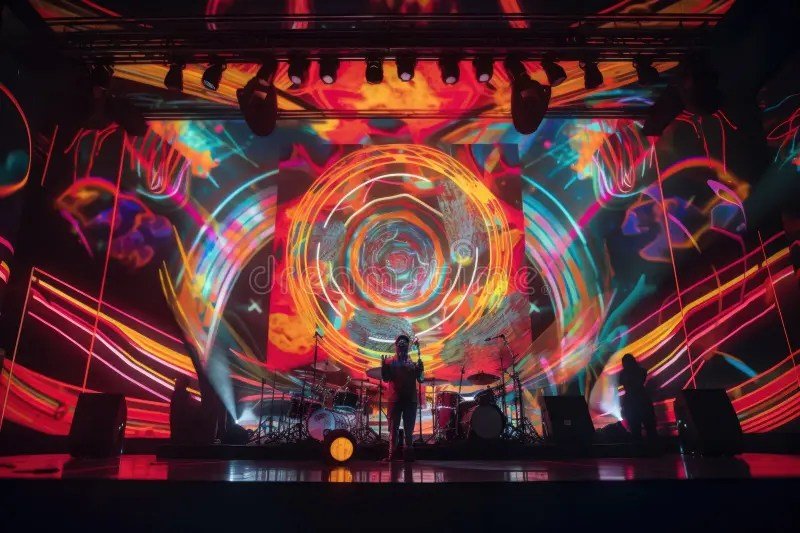
Imagine a concert where the music isn't just heard, but seen and felt – a symphony of light and shadow, pulsating graphics, and immersive environments that dance in perfect synchronicity with every note. This isn't just a dream of the future; it's the present reality of modern Concert Production & Visuals. Far beyond simple light shows, today's visual elements are an integral part of the artistic narrative, turning live performances into truly unforgettable, multi-sensory spectacles.
From the smallest club gig to stadium-filling extravaganzas, artists are leveraging cutting-edge technology to craft stunning backdrops, dynamic effects, and responsive environments that deepen the audience's connection and elevate the emotional impact of their music. Think of it as painting with light and motion, where every beat and melody finds its visual counterpart, creating an experience that resonates long after the final chord fades.
At a Glance: Crafting Visual Magic
- Visuals are more than decoration: They're a core part of storytelling, enhancing emotion, and deepening audience connection.
- Tech is key: AI-powered tools and specialized software make creating stunning, responsive visuals more accessible than ever.
- Variety is the spice of light: From reactive graphics to grand projection mapping and intricate lighting design, there's a visual style for every genre and venue.
- Start simple, think big: You don't need a massive budget to begin. Phased approaches allow you to build from templates to fully custom, immersive experiences.
- Consistency and intent matter: Align visuals with your brand and music's energy. Less can often be more impactful than overwhelming chaos.
- Test, test, test: Always rehearse with your visuals to ensure they complement, rather than detract from, your performance.
Beyond the Backlight: Why Visuals Are Essential
In an increasingly saturated entertainment landscape, standing out is paramount. Concert visuals are no longer a luxury for headliners; they're a vital tool for artists at every level to amplify their presence, forge deeper connections, and leave a lasting impression. They do this by:
- Amplifying Emotional Tone: A soaring guitar solo feels even more epic when accompanied by a rush of swirling colors; a contemplative ballad gains depth with gentle, evolving textures. Visuals translate sound into feeling.
- Highlighting Energy and Dynamics: The ebb and flow of a song become palpable when visuals swell with crescendos and soften with delicate passages, guiding the audience through the musical journey.
- Creating Immersion: By transforming the stage and surrounding environment, visuals draw the audience into the artist's world, making them feel like participants rather than just spectators.
- Enhancing Brand Identity: Consistent visual themes, colors, and motion styles become an extension of an artist's brand, making their shows instantly recognizable and reinforcing their unique aesthetic.
- Making Shows Unforgettable: In a world awash with content, a truly spectacular visual experience elevates a good performance to an iconic one. These are the moments audiences talk about and share.
The Visual Palette: Types of Concert Visuals
The world of concert visuals is rich and diverse, offering a spectrum of techniques to fit any artistic vision or budget. Understanding these types is the first step to choosing what's right for your show.
Reactive Visualizers: The Beat's Best Friend
Imagine graphics that pulse, morph, and dance in perfect real-time sync with your music. That's the magic of reactive visualizers. They're particularly popular with DJs, electronic producers, and solo acts where the music's rhythm and dynamics are central.
- How they work: Sophisticated algorithms analyze audio signals (like BPM, frequency, and volume) and translate them into visual parameters, creating dynamic, ever-changing patterns, shapes, and colors.
- Impact: They add an immediate, energetic layer to the performance, making the sound feel visible and tangible. They're excellent for maintaining a high-energy atmosphere and providing continuous engagement.
Projection Mapping: Turning Surfaces into Canvases
Projection mapping is where art meets architecture. This technique involves projecting visuals onto irregularly shaped 3D surfaces – be it stage props, architectural elements, or even entire buildings – to transform them into dynamic, illuminated canvases.
- How it works: Specialized software warps and blends projections to fit the exact contours of an object, making it appear as if the visuals are painted directly onto its surface, often creating stunning optical illusions or immersive environmental changes.
- Impact: It can completely redefine a performance space, creating bespoke stage designs that evolve throughout the show, from fantastical landscapes to abstract geometric forms. Companies like C-Squared specialize in these large-scale integrations, seamlessly blending projection with other visual elements.
Lighting Design: Sculpting Atmosphere with Light
Often considered a separate discipline, lighting design is, at its heart, a crucial component of concert visuals. It uses strobes, washes, spots, and synchronized patterns to alter perception, enhance mood, and guide the audience's focus.
- How it works: Lighting designers use an array of fixtures (moving heads, LEDs, lasers) controlled by complex DMX systems to create dynamic scenes. These can be pre-programmed or operated live, often synced with the music.
- Impact: Beyond mere illumination, lighting creates depth, highlights performers, builds tension, and releases energy. A sudden burst of strobes can punctuate a beat, while a soft, colored wash can envelop the audience in a specific mood. The legendary Hannah Montana tour, for instance, masterfully used lighting to define different emotional arcs and character shifts within the performance, showcasing its power beyond simple visibility.
The Toolkit: Software & Hardware for Visual Creation
Bringing these visions to life requires a combination of powerful software and accessible hardware. The good news? There are options for every budget and skill level.
Software & Platforms: Your Digital Canvas
- doodooc: This platform is a game-changer for independent artists and musicians. It's fast, intuitive, and remarkably affordable, allowing creators to generate beat-reactive videos from templates with ease. It democratizes visual creation, making it accessible even if you have no prior VJ experience.
- Resolume Arena: A professional favorite for VJs (Video Jockeys), Resolume Arena offers robust features for real-time video mixing, effects, and mapping. It's built for live performance, offering flexibility and powerful control.
- VDMX: Another staple in the professional VJ world, VDMX is a highly customizable and flexible platform for live video performance and installation. It's known for its modular interface, allowing users to build their own unique control layouts.
- TouchDesigner: For those looking to push the boundaries of custom visuals, interactive installations, and generative art, TouchDesigner is an industry-standard. It's a node-based visual programming environment that allows for incredibly complex and unique visual systems, though it comes with a steeper learning curve.
Budget-Friendly Hardware: Making Impact Accessible
You don't need a stadium-sized budget to start experimenting with visuals. Many effective tools are surprisingly affordable.
- Projectors: The workhorse of many visual setups. Accessible, high-impact projectors can transform any blank surface into a dynamic canvas. Even a decent home projector can make a huge difference in a smaller venue.
- LED Strips: Flexible, affordable, and incredibly versatile, LED strips can be used to outline stages, create ambient glows, or even form basic patterns. They're perfect for adding dynamic color and motion to smaller setups.
- Tablet or Phone Setups: For simple loop visuals or basic real-time control, apps like Luminair (for lighting control) or VLC (for video playback) on a tablet or smartphone can be surprisingly effective. This is a great starting point for solo artists or acoustic sets.
- DIY Visual Control (Arduino, Raspberry Pi): For tech-savvy artists, microcontrollers like Arduino or single-board computers like Raspberry Pi offer endless possibilities for custom, reactive visual systems. You can program them to respond to sound, movement, or other inputs, creating truly unique effects.
The Art of Impact: Making Visuals Unforgettable
Technical prowess is only half the battle; true impact comes from intentional design and creative application. Here’s how to ensure your visuals truly resonate:
- Keep It Consistent: Your visuals should be an extension of your artistic identity. Stick to a consistent aesthetic – perhaps 2-3 primary colors, recurring shapes, or specific motion styles. This alignment with your brand and genre creates a cohesive and recognizable experience. Think of how a band's album art often finds its way into their live show visuals; it's all part of the same creative universe.
- Match the Energy: This is paramount. Visuals should be a dynamic partner to your music, not a static backdrop. They need to rise and fall with the music's energy – slow, ethereal visuals for intros and breakdowns; fast, intense graphics for climaxes and high-energy sections. This synchronization creates a powerful, unified emotional arc for the audience.
- Test in Advance: Never go live without a thorough rehearsal. Project your visuals in a space similar to your venue to check pacing, brightness, color accuracy, and overall impact. What looks great on a small screen might be overwhelming or lost in a large venue. Test the transitions, the timing, and how the visuals interact with your stage presence.
- Less Is More: It's easy to fall into the trap of overstimulation. A flurry of chaotic, unrelated visuals can distract from the music and overwhelm the audience. Simple, intentional visuals are often far more impactful. Focus on a few strong ideas per song or section, letting space and subtlety create tension and release.
- Start Small, Build a Signature: You don't need to launch with a stadium-level production. Begin with accessible tools like doodooc to develop a recognizable visual identity. Experiment with templates, find what resonates with your sound, and slowly build your repertoire. Over time, these small experiments can evolve into your signature style, a visual language uniquely yours. For instance, doodooc has shown how even ancient venues can be transformed, as seen with their real-time projections onto the Garni Temple for a rave, showcasing how starting small can lead to grand experiences. They even created 40 track-specific visualizers for a classical piano performance honoring Scriabin, demonstrating versatility across genres.
Your Visual Journey: Building a Setup in Phases
Concert visuals might seem daunting, but like any creative endeavor, they can be approached in manageable stages. Think of it as building your visual toolkit and expertise incrementally.
Phase 1: The Template Takeoff
This is your entry point, ideal for open mics, small club gigs, or as you're starting to define your sound.
- Focus: Utilizing pre-made templates and accessible hardware.
- Tools: Platforms like doodooc are perfect here. You can quickly generate reactive content that syncs with your beats without needing deep VJ skills. Pair this with a basic, accessible projector and perhaps a few LED strips for ambient light.
- Goal: Get comfortable with projecting visuals, understanding how they interact with your performance and audience, and developing a consistent visual style. It's about getting something up there that elevates your show.
Phase 2: Embracing Interactivity
Once you're comfortable with static or pre-rendered visuals, it's time to introduce live control and more dynamic elements. This phase is great for festival slots, longer sets, or hybrid performances where real-time manipulation can truly shine.
- Focus: Live control and real-time manipulation.
- Tools: Step up to software like Resolume Arena, VDMX, or even start exploring TouchDesigner for more custom interactivity. These tools allow you to mix video clips, apply effects, and trigger visuals live in response to your music or stage presence. You might upgrade your projector for better brightness or resolution, and integrate more sophisticated LED control.
- Goal: Master the art of live visual improvisation, making your visuals truly responsive and unique to each performance. This is where the VJ really comes into their own, reacting to the crowd and the mood of the moment.
Phase 3: The Fully Custom Spectacle
This is the pinnacle, ideal for album launches, major tours, or large-scale concerts where every visual element is bespoke and deeply integrated into the artistic vision.
- Focus: Collaborative design, 3D visuals, animated narratives, and crowd-responsive elements.
- Tools: This often involves collaborating with specialized visual artists, creative teams, and technical directors. You might use advanced software like TouchDesigner for generative art, 3D animation software for custom narratives, and integrate large-scale LED walls, complex projection mapping systems, and even interactive sensors that respond to crowd movement or artist gestures. Companies like Compeller.ai offer AI-driven platforms that can handle parts of this complexity, streamlining the creation of highly responsive and immersive experiences.
- Goal: Create a truly unique, immersive, and narrative-driven visual experience that becomes synonymous with your artistry, making your concert an unforgettable event in itself.
Addressing Common Questions & Misconceptions
"Isn't this just for EDM artists or big-budget tours?"
Absolutely not. While electronic music often leverages visuals heavily, the principles apply to all genres. A classical pianist using abstract reactive visuals to illuminate their music, a folk band projecting subtle nature scenes, or a punk rock group with aggressive, fast-cut graphics – visuals enhance diverse genres. And as demonstrated by doodooc, even small-scale tools can create profound effects at any venue.
"Do I need to be a tech wizard to do this?"
Not anymore. Platforms like doodooc are specifically designed for musicians without a VJ background, offering templates and intuitive interfaces. As you progress, you can learn more complex software, but the entry barrier for impactful visuals has never been lower.
"Won't it distract from the music?"
Poorly executed visuals can, yes. But intentional, consistent, and energy-matched visuals enhance the music. The goal isn't to create two separate experiences, but one cohesive, multi-sensory whole where visuals serve the sound. Remember the "less is more" principle: simple, well-timed visuals often have more impact than a chaotic light show.
"Is it expensive to get started?"
No. As outlined in Phase 1, you can start with very affordable tools. A laptop, a doodooc subscription, and an entry-level projector can be enough to significantly elevate your local show. Invest incrementally as your needs and budget grow.
Elevating Your Performance, One Pixel at a Time
The landscape of live music is continuously evolving, and Concert Production & Visuals are at the forefront of this transformation. They are no longer a mere garnish but a core ingredient in crafting an artist's voice and connecting deeply with an audience. By thoughtfully integrating visuals, you're not just putting on a show; you're creating an experience, a memory, a moment where sight and sound merge into something truly spectacular.
Start small, build in phases, and always keep your artistic intent at the heart of your visual choices. The journey from simple beat-reactive graphics to fully immersive, custom spectacles is a thrilling one, and it's more accessible than ever before. Your audience is ready to see and feel your music in a whole new dimension – are you ready to show them?